How to Declutter Your Medicine Cabinet Safely

Affiliate disclaimer: Some links on this blog are affiliate links (Amazon included), meaning I may earn a commission at no extra cost to you.
How to Declutter Your Medicine Cabinet Safely
Half your medicine cabinet is expired, unlabelled, or belonging to someone who moved out three years ago. Swallowing outdated ibuprofen won’t solve that.
Why Is Your Medicine Cabinet a Health Hazard?
Bathrooms are humidity chambers. Moisture degrades medications faster than manufacturers account for. Pills crumble. Liquids cloud. Bandages lose stickiness. Meanwhile, you’re stacking “just in case” bottles from every cold season since 2015. The medicine cabinet becomes a pharmacy museum. And it’s dangerous. Expired antibiotics won’t cure anything but your false sense of security. Outdated epinephrine won’t save a life. Taking a medication past its date isn’t a budget move—it’s a gamble with your body.
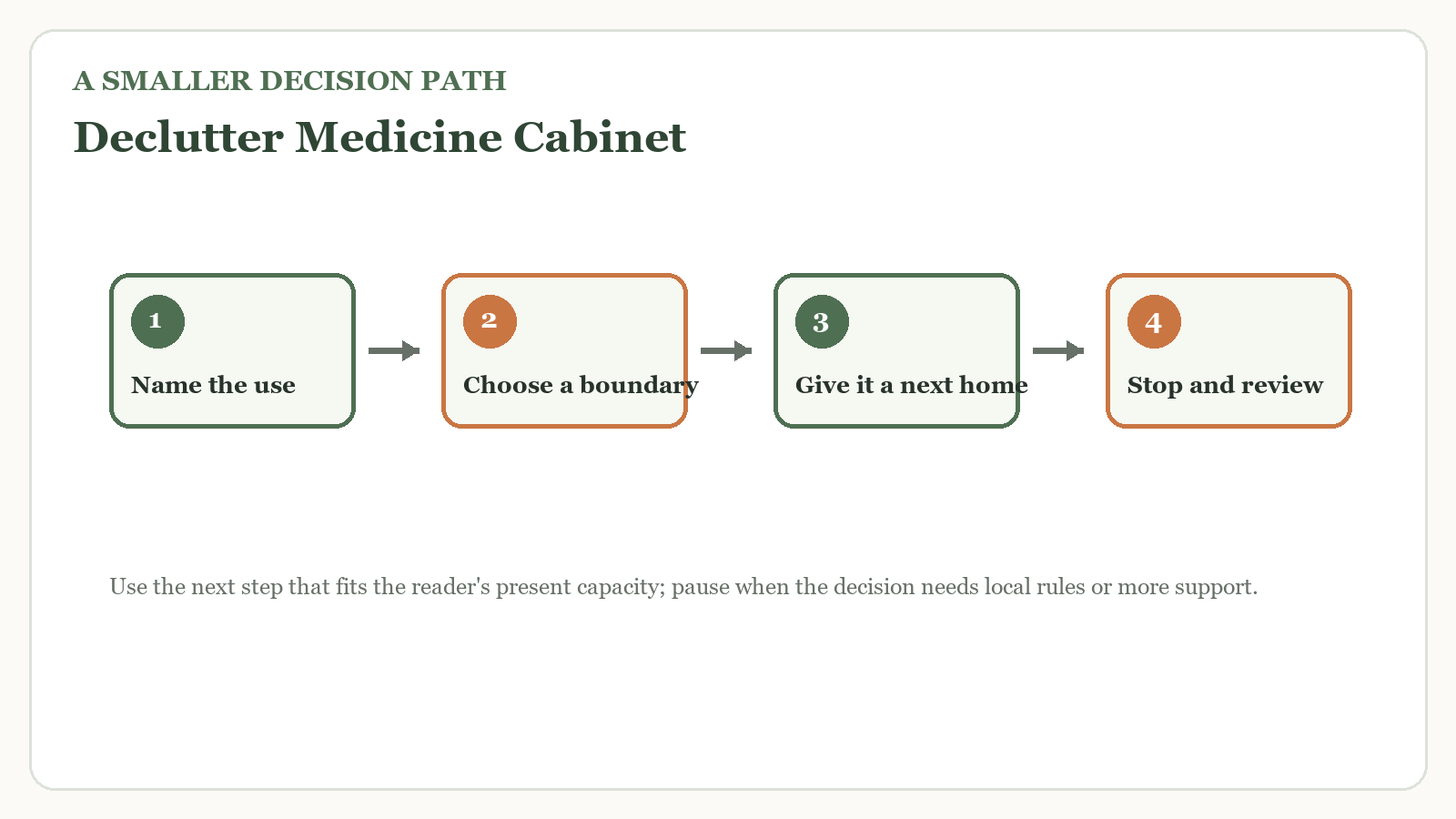
The safe declutter starts with a full inventory. Remove everything. Check dates against the FDA’s expiration guidelines. Drop-off expired meds at a pharmacy take-back program—never flush them. What’s left should be sorted by person, not by type. Your medicine cabinet shouldn’t be a shared resource pool. If three people live in your house, you need three labeled bins. Label them. Put names on them. If someone’s bin is empty, they need to restock it themselves.
What Should Actually Live in Your Medicine Cabinet?
Keep it lean. Pain relievers, antacids, allergy meds, bandages, antiseptic wipes, thermometer, and one week’s supply of prescription meds. That’s the entire rotation. Everything else—extra toothpaste, hair ties, spare glasses—belongs elsewhere. If you’re storing vitamins, move them to a kitchen drawer. They belong near meals, not near showers. If you keep backup prescriptions, store them in a fireproof box outside the bathroom. Humidity kills pill integrity faster than time.
Use a small acrylic tray to keep bottles upright and visible. No more burying the good stuff behind the half-empty cough syrup from 2021. For a related deep clean, try our under-sink declutter guide—bathroom and kitchen cabinets share the same organizational DNA. And if you want to tackle the mirror above it, see our bathroom mirror declutter tips.
Here’s My Take:
A medicine cabinet is not a storage closet with better lighting. Every item in there should serve a current, identifiable person for a current, identifiable need. If you can’t say who it’s for and why it’s there, it’s occupying space that could hold something that actually matters. The “just in case” mentality is what turns medicine cabinets into hoarding zones. Just in case of what? A zombie apocalypse? A flu pandemic? You don’t need seven boxes of tissues and a gallon of hand sanitizer. You need one of each, and you need to know they work. Safety first. Simplicity second. Everything else is clutter.
References
Disposal of Unused Medicines: What You Should Know (U.S. Food and Drug Administration)
FDA – Medication Disposal Guidelines
GoodRx – Understanding Medicine Expiration Dates
WebMD – Medicine Expiration: Myth or Fact