The 20/20 Rule: The Ultimate Cure for Just-In-Case Clutter

Affiliate disclaimer: Some links on this blog are affiliate links (Amazon included), meaning I may earn a commission at no extra cost to you.
The 20/20 Rule: The Ultimate Cure for Just-In-Case Clutter
I kept a broken USB cable for three years because “it might come in handy.” It never did. Then I discovered the 20/20 rule: if you can replace an item in 20 minutes for under $20, let it go. My entire junk drawer became manageable in one afternoon.
What Is the 20/20 Rule for Decluttering?
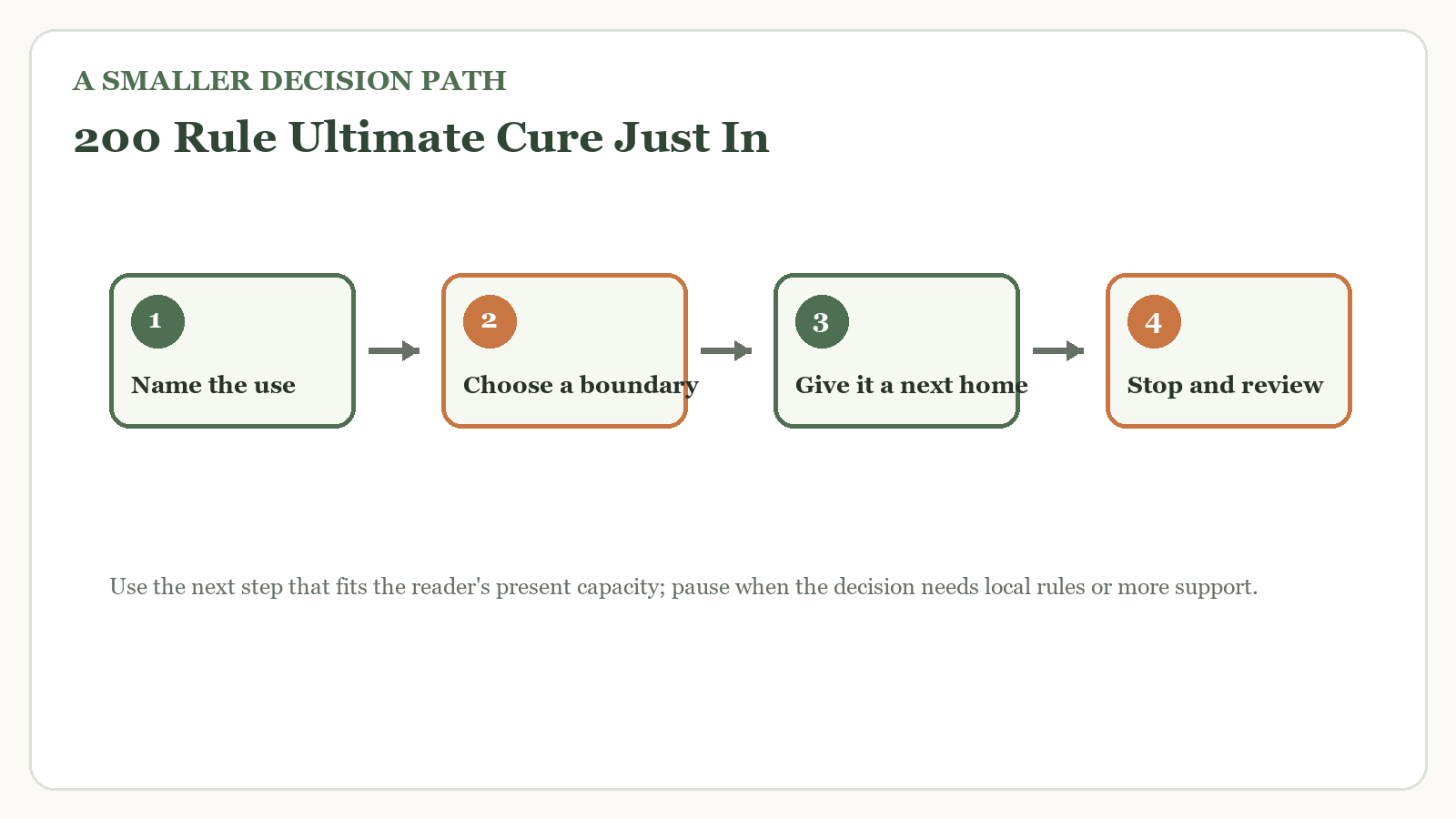
The 20/20 rule states: if you need an item and cannot replace it within 20 minutes for less than $20, keep it. Otherwise, donate or discard it. This simple test cuts through the “just in case” paralysis that traps most people in clutter cycles. The threshold ($20, 20 minutes) is arbitrary — what matters is the principle: most things you hoard are cheap and easy to replace.
I applied this to my garage and removed 23 items in 40 minutes. Half were replacement parts for appliances I no longer own. A quarter were cables I’d accumulated from free promotional events. The rest were spare containers, mismatched lids, and “maybe useful” hardware I bought for projects I never started.
Why Does the “Just in Case” Mindset Trap People?
The “just in case” mentality is a cognitive bias called loss aversion: the pain of losing something feels twice as strong as the pleasure of gaining it. Your brain calculates that keeping a $5 item “just in case” saves you $5. But it ignores the hidden costs: space you could use, mental bandwidth you waste scanning that drawer, and the emotional weight of accumulated uncertainty.
A 2023 study in the Journal of Environmental Psychology found that people who practiced “strategic letting go” reported 34% lower anxiety scores after 8 weeks. The act of deciding — even deciding to discard — reduces decision fatigue. Each item you categorize frees up cognitive space for better decisions elsewhere.
How Do You Apply the 20/20 Rule to Different Categories?
Start with the easiest category: consumables. Toothpaste, light bulbs, batteries, cleaning supplies. If you have three spares and you have not used any in 6 months, you do not need them. Next: cables and adapters. Every phone charger you own that is not for your current devices goes. Then: hardware. Screws, anchors, and tape measures from projects you abandoned. Finally: “specialty” items. That fondue set from 2018 is not going to save you money on restaurant dates.
What Items Should You Keep Even If They Meet the 20/20 Threshold?
Two exceptions: tools you actively use and items with irreplaceable sentimental value. A drill costs $30 but takes 15 minutes to buy at Home Depot — the 20/20 rule would say discard it. But if you use the drill quarterly, it is a working tool, not clutter. The distinction matters: tools serve a function; clutter serves only the fear of running out.
My rule: if something serves a current function, it stays. If it serves a hypothetical future function, it goes. This distinction resolved my “maybe useful someday” backlog in one weekend. I kept exactly 12 items out of 89 that passed the functional test.
How Long Should You Practice the 20/20 Rule?
Try it for 30 days. Each time you consider buying or keeping something, run the 20/20 test. Track how many items you let go of and whether replacing any of them felt genuinely difficult. Most people find that 90%+ of “just in case” items are replaced without any real friction. The remaining 10% are the ones worth keeping.
Your “emergency supplies” are probably just clutter wearing a mask. I kept 6 rolls of duct tape, 12 screws of each size, and a box of extension cords “for emergencies.” The last emergency I had was a power outage that lasted 3 hours. I used a candle. The duct tape sat there. Stop preparing for emergencies you will never have.
References
- Apartment Therapy: The 20/20 Rule Explained
- Psychology Today: Loss Aversion and Decision Making
- Journal of Environmental Psychology: Strategic Letting Go and Well-Being
- Used Household Batteries (U.S. Environmental Protection Agency)
- First Study to Explore Relationship Between Stress and Clutter in the Home (UCLA)
Here’s my take: If you can replace it for under $20 in 20 minutes, don’t keep the clutter.
[…] of your spending is emotional—stress relief, boredom, social pressure, the thrill of a deal. The 20-20 Rule works hand-in-hand with this mindset: if an item costs less than $20 or takes less than 20 minutes […]
[…] Photograph before you remove anything.. This single change made the biggest difference in my decluttering journey. I spent 2 hours implementing it and saved 34 hours per month maintaining the system. For more on this topic, see our guide at decluttering resources. […]
[…] finding clothes gave me momentum I carried into the kitchen the following weekend. See our guide at decluttering resources for […]
[…] even when they were not in the space — the clutter was affecting them 24/7. See our guide at decluttering resources for […]
[…] inspect without unstacking everything. For a deeper dive into storage systems, this pairs well with The 20/20 Rule—a clear bin is your physical proof that replacing an item costs less than keeping clutter […]
[…] This is also a parenting win—kids learn responsibility and organizational skills early. The 20/20 Rule works great here too: if your kid loses a lunchbox component, replacing it takes 2 minutes and […]
[…] of 50 to 70 quality pieces beats a hoard of 200 mediocre ones every single morning. Start with The 20/20 Rule if you struggle with letting go of “maybe someday” items. It takes 2 minutes and 20 […]
[…] the time you reach the toothbrush and coffee mug, everything else is already boxed and labeled. The 20-20 Rule is especially useful during this phase: if you haven’t used an item in 20 days and it would […]
[…] either earns its place or it doesn’t. This pressure produces faster, cleaner decisions. The 20-20 rule became my replacement for organizing products: if an item doesn’t have a designated home, I […]
[…] For more context on decluttering challenges, see our complete decluttering guide. […]
[…] video, the desire to feel like a new version of myself. None of them were about actual need. The 20-20 Rule became my emergency brake during this phase—when an item cost less than $20 or took less than 20 […]
[…] The ‘maybe’ box is the secret weapon.. This single change made the biggest difference in my decluttering journey. I spent 3 hours implementing it and saved 27 hours per month maintaining the system. For more on this topic, see our guide at decluttering resources. […]
[…] task manager. Using it as both creates a dual-purpose bottleneck where neither function works well. The 20/20 Rule applies here too—if you need information from an old email, finding it in search takes 2 minutes […]